How much you actually need (and why most people miss it)
Adults need around 1,000 mg of calcium per day; women over 50 and men over 70 need closer to 1,200 mg. The shortfall isn’t usually dramatic — it’s a hundred or two hundred milligrams every day, quietly accumulating into thinner bones a decade later.
People who cut dairy without replacing it are the most common group running low. People who drink a lot of coffee or take long-term antacids are next. Both groups can stay covered easily — they just need to know where calcium is hiding outside the dairy aisle.
“Bones aren’t built in a year. They’re built — or eroded — by what you eat across a decade.”
What calcium does, beyond the obvious
- Heart rhythm. Calcium and potassium co-regulate every heartbeat.
- Muscle contraction. Calcium contracts; magnesium relaxes. Out-of-balance ratios show up as cramps and twitching.
- Nerve signaling and blood clotting. Both depend on tightly controlled calcium movement in and out of cells.
The food sources that quietly cover most of it
One quick note: spinach contains a lot of calcium on paper, but most of it is locked away by oxalates and barely absorbed. Kale, bok choy and broccoli are the usable greens.
A smoothie that quietly covers a third of the day
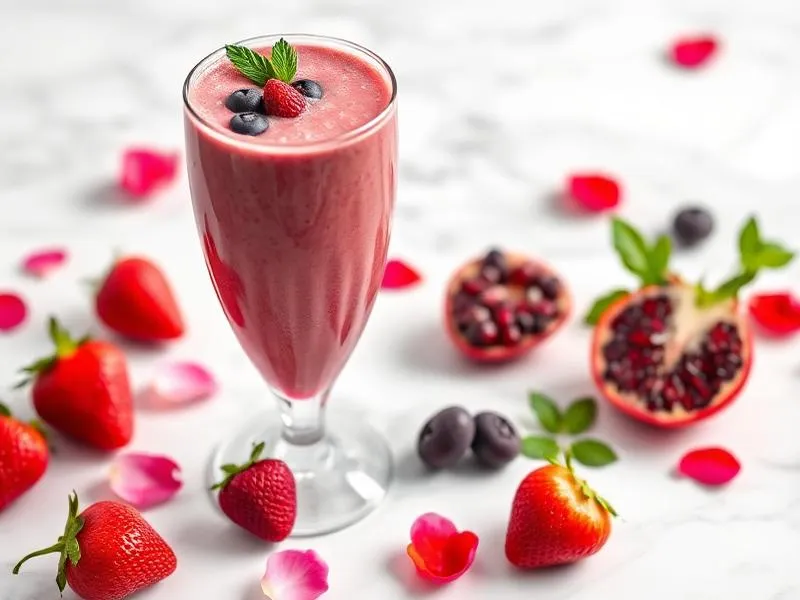
Bone-Friendly Beauty Smoothie
5 minServes 1
Ingredients
- • 200 ml fortified soy milk
- • 1 tbsp tahini
- • 1 tbsp chia seeds
- • 1 small banana
- • 1 cup frozen mango
- • Squeeze of lemon
- • Small handful ice
Method
- Soak the chia seeds in the soy milk for 2–3 minutes if you have time — it blends smoother.
- Add everything to the blender and run on high for 45–60 seconds.
- Pour and drink within an hour — the chia keeps thickening.
Roughly 450–500 mg calcium per glass — about half your daily target.
Where people go wrong
Quick summary
- Adults need about 1,000 mg of calcium daily; older adults need a little more.
- Yogurt, fortified plant milks, calcium-set tofu, tahini and kale do the heavy lifting.
- Spread intake across meals — large single doses absorb poorly.
- Pair with vitamin D, magnesium and potassium for the full effect.
Frequently asked questions
Do I need dairy to get enough calcium?
No. Fortified plant milks, calcium-set tofu, tahini and dark leafy greens reliably cover the daily target. Many traditional diets without dairy still produce strong bones.
Will too much calcium hurt me?
Food-based calcium is safe for healthy adults. Very high doses from supplements (above 2,500 mg/day) have been linked to kidney stones and possible cardiovascular risk — keep supplements modest unless prescribed.
Why is vitamin D always mentioned with calcium?
Calcium can’t cross from your gut into your bloodstream efficiently without vitamin D. Without it, even a high-calcium diet under-delivers.
Want a week of breakfasts that quietly cover calcium and the rest of your micronutrients? Our Beauty Smoothies guide is built around skin, hair and bone-friendly ingredients.
See the Beauty Smoothies guideSources & Further Reading
WellMixLife articles are written for educational and lifestyle purposes using publicly available wellness and nutrition resources. For medical concerns, diagnoses, allergies, supplements, medications, or treatment decisions, always consult qualified healthcare professionals or official medical authorities.
- NIH Office of Dietary Supplements— Calcium — Fact Sheet for Health Professionals
- BMJ— Calcium intake and bone mineral density: systematic review
- American Journal of Clinical Nutrition— Bioavailability of calcium from plant foods
- Journal of the American College of Nutrition— Vitamin D and calcium absorption
This content is educational only and is not medical advice. Always consult qualified healthcare professionals regarding medical conditions, supplements, allergies, medications, or dietary changes.