Healthy Smoothie Recipes for Beginners: Your Complete Guide to Getting Started
A blender, a handful of frozen fruit, a scoop of something with protein. That's most of what a beginner needs. The recipes below are the ones we keep going back to — quick enough for a weekday morning, balanced enough that you don't crash an hour later.
“Most "bad" smoothies are just dessert in disguise. The trick is one quiet ingredient with protein.”
Why Smoothies Are the Perfect Starting Point for Healthy Eating
Smoothies require no cooking skills, minimal cleanup, and can be tailored to almost any dietary preference or health goal. They're essentially a gateway to healthier eating habits — blending fruits, vegetables, and superfoods into one glass gives your body a concentrated dose of nutrition without the time commitment of traditional meal prepping.
Unlike juicing, which strips away fiber, smoothies retain the whole fruit and vegetable, keeping you fuller for longer and supporting healthy digestion. A single smoothie can deliver multiple servings of fruits and vegetables — something many people struggle to achieve through regular meals alone.
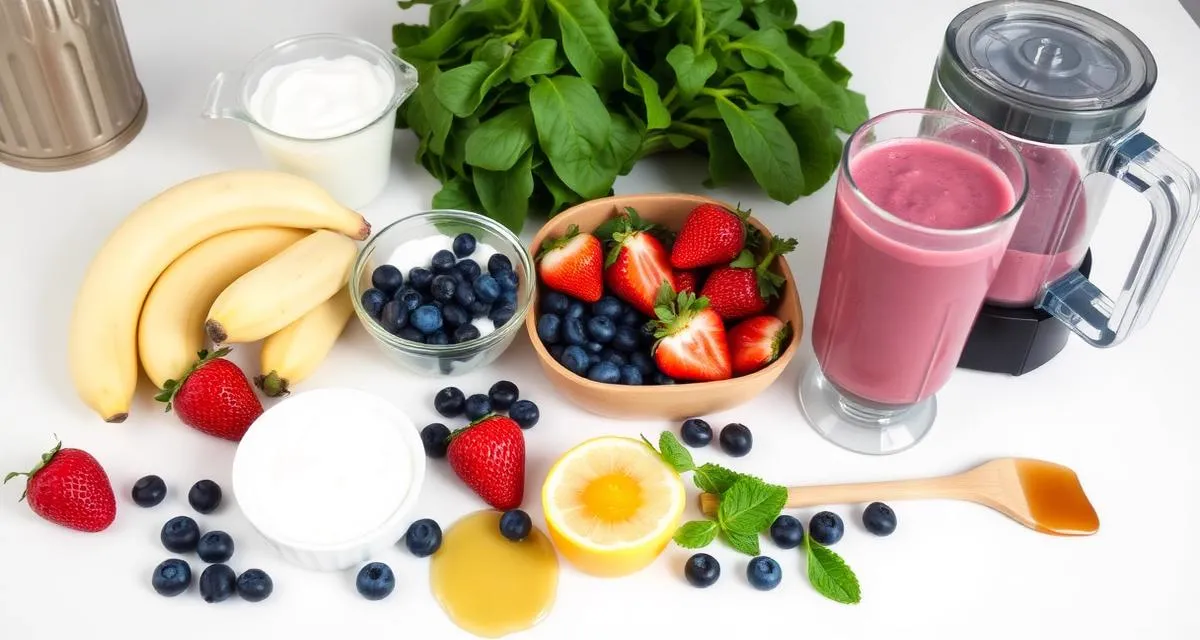
Perhaps most importantly, smoothies taste great. Even if you're someone who doesn't enjoy eating salads or steamed vegetables, you'll likely find that a well-made smoothie with banana, berries, and a handful of spinach tastes more like a dessert than a health food. That's the magic of blending — it makes nutrition effortless and genuinely enjoyable.
Essential Ingredients Every Beginner Should Stock Up On
Building a great smoothie starts with having the right ingredients on hand. Here's your beginner pantry checklist:
- Fruits: Bananas (the ultimate smoothie base for creaminess), berries (blueberries, strawberries, raspberries), mangoes, and pineapple. Buy them frozen for thicker texture, longer shelf life, and no prep work.
- Leafy greens: Spinach and kale are the two most popular choices. Spinach is virtually tasteless in smoothies, making it perfect for green smoothie beginners. Kale has a slightly stronger flavor but delivers exceptional nutrition.
- Liquid bases: Oat milk, almond milk, coconut water, or even plain water. Avoid fruit juice as a base — it adds unnecessary sugar and calories without the fiber benefit of whole fruits.
- Protein boosters: Greek yogurt, hemp seeds, chia seeds, flax seeds, nut butters (peanut or almond), or a quality plant-based protein powder.
- Natural sweeteners: Raw honey, medjool dates, or a dash of maple syrup. Most smoothies won't need added sweetener if you use ripe bananas and sweet fruits.
- Superfoods: Once you're comfortable with basics, experiment with cacao powder, maca, turmeric, or spirulina to level up your blends.
The Simple Smoothie Formula That Always Works
Every great smoothie follows a basic ratio. Once you learn this formula, you can create endless variations without ever needing a recipe:
The 1-1-1-1 Formula:
- 1 cup liquid — almond milk, oat milk, coconut water, or water
- 1 cup frozen fruit — your main flavor base
- 1 handful greens — spinach or kale (optional for beginners)
- 1 tablespoon booster — chia seeds, nut butter, protein powder, or flax
Blend on high for 45–60 seconds until completely smooth. Add more liquid if it's too thick, or more frozen fruit if it's too thin.
5 Easy Beginner Smoothie Recipes to Try Today
1. Classic Berry Bliss
1 cup mixed berries (frozen), 1 banana, 1 cup oat milk, 1 tbsp honey. Blend until smooth.
Rich in antioxidants and vitamin C. Perfect for breakfast or a mid-morning snack.
2. Green Starter Smoothie
1 cup spinach, 1 banana, ½ cup frozen mango, 1 cup almond milk. Blend on high for 60 seconds.
You won't taste the spinach — the mango and banana create a tropical sweetness that completely masks the greens.
3. Tropical Morning Energizer
1 cup frozen pineapple, ½ banana, 1 cup coconut water, 1 tbsp chia seeds. Blend and enjoy.
Hydrating and refreshing — coconut water adds electrolytes for a natural energy boost. Learn more about natural energy foods.
4. Peanut Butter Power
1 banana, 2 tbsp peanut butter, 1 cup oat milk, 1 tbsp cacao powder, 1 tsp honey.
Tastes like a milkshake but delivers protein, healthy fats, and sustained energy. Great as a post-workout recovery blend.
5. Cleansing Cucumber Mint
½ cucumber, 1 green apple, handful of mint, juice of ½ lemon, 1 cup water, ½ cup ice.
Light, refreshing, and perfect for warm days. A gentle introduction to detox smoothies.
Common Beginner Mistakes and How to Avoid Them
Even with simple recipes, there are a few pitfalls that can turn your smoothie from a health booster into a sugar bomb or an unappetizing sludge:
- Too much fruit juice: Using juice as your liquid base adds empty calories and spikes blood sugar. Stick with water, nut milks, or coconut water instead.
- Skipping protein and fat: A smoothie made only of fruit will give you a quick sugar rush followed by a crash. Always include protein (yogurt, seeds, powder) and healthy fat (nut butter, avocado) for sustained energy.
- Over-blending greens: If your smoothie turns brown and tastes bitter, you've added too many greens relative to fruit. Start with a small handful and increase gradually as your palate adjusts.
- Making it too large: A 32-ounce smoothie might contain 600+ calories. For a snack, aim for 12–16 ounces. For a meal replacement, 16–20 ounces with plenty of protein is ideal — especially if weight loss is your goal.
- Not using frozen fruit: Fresh fruit creates thin, watery smoothies. Frozen fruit gives you that thick, creamy texture without needing ice (which dilutes flavor).
How to Build a Sustainable Smoothie Habit
The key to making smoothies a long-term habit — not just a passing phase — is preparation and variety. Here are practical tips that work:
Prep smoothie packs: On Sunday evening, portion out frozen fruit, greens, and dry ingredients into individual freezer bags. In the morning, dump a bag into your blender, add liquid, and blend. Total time: under 3 minutes.
Rotate your recipes: Don't drink the same smoothie every day. Rotate between berry, green, tropical, and chocolate/nut butter themes to keep things exciting. Our recipe collections are designed with this rotation in mind.
Track how you feel: Pay attention to your energy levels, digestion, and mood after incorporating daily smoothies. Most people notice meaningful improvements within the first two weeks — that positive feedback loop is what turns a habit into a lifestyle.
Ready to Go Beyond the Basics?
These five recipes are just the beginning. Once you're comfortable with the fundamentals, explore our complete recipe collections tailored to specific goals — from energy-boosting smoothies that replace your morning coffee to green smoothie recipes loaded with leafy greens and high-protein recovery blends for active lifestyles. Or grab the Complete Bundle with all 135 recipes across 9 collections for the best value.
Start eating healthier today
Download our free 7-day healthy recipe plan and discover how easy it is to put something delicious and nutritious on the table every day.
🔒 We respect your privacy. No spam, just valuable recipes.
Frequently asked questions
What's the easiest smoothie recipe for beginners?
The Classic Berry Bliss: 1 cup frozen mixed berries, 1 banana, 1 cup oat milk, and 1 tbsp honey. Blend 45 seconds. It's foolproof, balanced, and takes under 3 minutes.
Do I need a high-powered blender to make smoothies?
No. Any blender that can crush ice will work for beginner recipes. Frozen fruit blends more easily than ice cubes, so you can start with a budget model and upgrade later if you make smoothies daily.
Are smoothies actually good for weight loss?
They can be — if you build them with protein, fiber, and healthy fat instead of just fruit and juice. See our guide on the best smoothies for weight loss for portion sizes and ingredient ratios.
How much protein should a beginner smoothie contain?
Aim for 15–25g if it's a snack, and 25–35g if it's replacing a meal. Greek yogurt, hemp seeds, nut butter, or a scoop of protein powder each add 8–20g depending on the serving.
Can I meal-prep smoothies for the week?
Yes. Portion frozen fruit, greens, and seeds into freezer bags on Sunday. In the morning, empty a bag into your blender, add liquid, and blend. Blended smoothies are best drunk fresh — prep the packs, not the finished drink.
Sources & Further Reading
WellMixLife articles are written for educational and lifestyle purposes using publicly available wellness and nutrition resources. For medical concerns, diagnoses, allergies, supplements, medications, or treatment decisions, always consult qualified healthcare professionals or official medical authorities.
- Cleveland Clinic— Are smoothies good for you?
- Mayo Clinic— Dietary fibre — essential for a healthy diet
- Harvard T.H. Chan School of Public Health— Vegetables & fruits — what to eat
- NHS— Eat well — basics of healthy eating
This content is educational only and is not medical advice. Always consult qualified healthcare professionals regarding medical conditions, supplements, allergies, medications, or dietary changes.